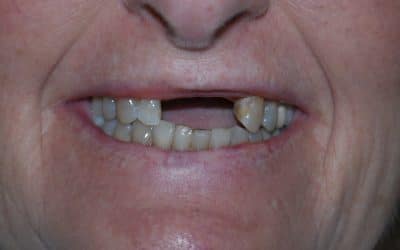
Missing teeth can affect more than just your smile; they can also affect your speech, chewing, facial structure, and self-esteem. If you’re considering tooth replacement options, you might be wondering whether an implant or a dental bridge is a better fit for your needs. Although both procedures are frequently used in contemporary dentistry, their functions vary based on your oral health, financial situation, and long-term objectives.
With the assistance of a reputable dentist in Cedar Park, Texas, you can make a confident, well-informed choice by knowing the differences between dental implants and fixed bridges. This blog will explain dental bridges and dental implants, their benefits and drawbacks, and how to choose the option that best suits your lifestyle and smile. By the time it’s all over, you’ll know more clearly whether a dental bridge or tooth implant is the best option for you.
What is a Dental Bridge?
A dental bridge is a permanent restorative that bridges the gap left by one or more missing teeth. The abutment teeth, which are the natural teeth on either side of the missing tooth, hold it in place. By carefully reshaping these supporting teeth, dental crowns can be positioned over them, giving the prosthetic tooth—known as a pontic—that fills the void a solid base.
By enhancing chewing capacity, speech clarity, and bite alignment, dental bridges improve your smile’s look and functionality. Additionally, they help prevent neighboring teeth from moving out of alignment, which may lead to additional dental problems. Dental bridges can closely resemble the colour, form, and strength of your original teeth, providing a smooth, natural-looking outcome. They are usually made of porcelain, ceramic, metal alloys, or a combination of these materials.
Types of Dental Bridges
Depending on your oral health, the position of the lost tooth, and the condition of the surrounding teeth, dentists may suggest several kinds of dental bridges. Typical choices consist of:
Conventional bridges – These provide sturdy, dependable support and are supported by dental crowns on both neighboring teeth.
Cantilever bridges – Usually utilized when there is little support, they are anchored to just one neighboring tooth.
Maryland bridges – They preserve more of the native tooth structure by attaching metal or porcelain wings to the backs of nearby teeth.
Implant-supported bridges – These are stronger, and help preserve the health because dental implants, rather than natural teeth, support them.
Benefits of Dental Bridges
Many patients continue to choose dental bridges as a tooth replacement option because they provide several valuable and functional advantages, such as:
- Smile restoration can be completed more quickly than with dental implants.
- For patients who prefer not to have surgery, this non-surgical tooth replacement option is appropriate.
- Better speech and chewing abilities, which contribute to the restoration of daily comfort and self-assurance
- A natural-looking appearance since bridges are made to blend in perfectly with the teeth around them.
- They are more affordable than implants because of their lower initial cost.
It’s crucial to remember that the adjacent teeth support dental bridges. The durability of the bridge may be affected over time by this increased strain on nearby teeth, which may also increase the risk of wear or other dental problems.
What is a Dental Implant?
An alternative for permanent tooth replacement that replaces both the visible tooth and its root is a dental implant. It is made from a tiny titanium post surgically inserted into the jawbone to serve as an artificial root. A crown is affixed to restore complete function and aesthetics when the implant has fused with the bone. Because of its longevity and ability to maintain jawbone health, patients seeking dental implants in Cedar Park, TX, frequently choose this option.
Benefits of Dental Implants
Because of their long-term benefits, dental implants are considered the gold standard for replacing missing teeth.
- Enable the jawbone to stop bone loss.
- Don’t rely on the support of nearby teeth.
- Provide outstanding stability and strength.
- With the proper care, it can live for decades.
- Feel and appear like real teeth.
Treatment may take many months because implants require surgery and healing time, but the outcomes are frequently worth the wait.
Dental Implants vs Fixed Bridges – Key Differences
It’s crucial to consider the long-term effects of both dental implants and permanent bridges on your oral health.
Dental Bridges
- Healthy neighboring teeth must be reshaped. Usually lasts ten to fifteen years.
- Quicker placement procedure.
- Reduced starting cost.
- It may be a factor in the loss of bone beneath the pontic.
Dental Implants
- Maintain the structure of the jawbone.
- Don’t impact the neighboring teeth.
- Extended duration of treatment.
- A greater initial outlay of funds.
- It can endure a lifetime if proper dental care is practiced.
The choice of solution that best suits your dental and lifestyle requirements depends heavily on these distinctions.
How to Choose Between Them?
Are implants superior to bridges? Numerous clinical and personal factors influence the response. The best approach to choosing the right course of action is to undergo a thorough examination with a skilled dentist in Cedar Park, Texas.
Factors to Consider
Your dentist will assess the following essential factors.
Jawbone health – Implants require sufficient bone density.
Number of missing teeth – Implants work best for one or more missing teeth.
General health: Implant eligibility may be affected by specific circumstances.
Timeline – Bridges provide faster outcomes
Budget – Bridges are less expensive up front.
Goals for longevity – Implants provide long-term stability.
Many individuals believe that implants are a better option than dental bridges for a long-term solution that protects oral health. However, in situations when implants are not practical, bridges can still be a great option.
When a Dental Bridge Could be More Appropriate
- You want a quicker, non-surgical fix.
- Crowns are already needed on neighboring teeth.
- Implant placement is limited by bone loss.
- Budgetary restrictions are an issue.
When it Could be Better to Get a Dental Implant
- You’re looking for a long-term, low-maintenance solution.
- Maintaining the jawbone’s health is crucial.
- You would rather not change healthy teeth.
- Most important is long-term durability.
Personalized dental care is the key to determining whether a dental bridge or tooth implant is the best option for you.
Reveal Dental – Encouraging a Confident Smile
In our opinion at Reveal Dental, every patient should have a personalized treatment plan created for long-lasting comfort, function, and confidence. Our familiar staff is available to assist you at every stage, whether you’re considering a dental bridge or exploring dental implants in Cedar Park, TX. We take the time to assess your oral health properly, clearly explain your options, and suggest solutions that align with your objectives and lifestyle.
If you’re still unsure whether a dental bridge or implant is best for your smile, make an appointment with Reveal Dental right now to learn how professional treatment from a reputable dentist in Cedar Park, Texas, may improve your oral health for years to come.

Submitted by Dr. Alkesh C. Sura
Dr. Alkesh C. Sura is the founder and lead dentist at Reveal Dental in Cedar Park, Texas. A North Carolina native, Dr. Sura earned both his Bachelor of Science in Public Health and Doctor of Dental Surgery degrees from the University of North Carolina at Chapel Hill.